
Photographed by Ron Lach (pexels).
There is a distinct, sharp line that exists between the final draft of a screenplay and the first day of principal photography. On the page, a story is built entirely out of text, dialogue, and whitespace. On set, that exact same story is suddenly built out of lenses, physical pacing, geometry, and the unpredictable energy of a live performance.
For filmmakers who wear both the writer and director hats, navigating this transition is one of the most fascinating puzzles in visual storytelling. It requires you to completely change your perspective: moving from the typewriters internal psychology to the camera's external logistics.
To successfully translate a script without losing its emotional core, a director has to look beyond the literal words and focus entirely on creating subtext through texture.
1. Translating the Unwritten Atmosphere
When you are writing a script, your primary tool is the reader's imagination. You can write a line as simple as "The room feels heavy with tension", and the reader's mind fills in the blanks.
When you step into a physical set, however, you can't film the word "tension". You have to manufacture it mechanically. A director has to translate that unwritten emotional weight into tangible, visual choices:
- The Framing: Deciding whether to claustrophobically trap a character in a tight close-up shot or leave them isolated in an overwhelming wide shot.
- The Art Direction: Working closely with your production design team to ensure the colour palette, specialized props, and physical textures of the space mirror the character's internal conflict.
- The Pacing: Allowing a moment of silence to breathe on camera rather than rushing straight to the next block of dialogue.
2. Letting go of the Literal Script
One of the hardest parts of directing your own script is learning when to stop protecting the text. During pre-production and rehearsals, you inevitably discover that a line of dialogue that read beautifully on paper feels forced when spoken aloud by an actor in a physical space.
A diligent director recognizes that cinema is a visual-first medium. If an actor can convey a complex emotional revelation with a single, subtle glance or a shift in body language, the written dialogue immediately becomes obsolete. The ultimate goal on set isn't to create a flawless, literal adaptation of your script; it is to capture the raw truth of the scene, even if that means adapting on the fly.
3. Bridging Creative Vision with On-Set Logistics
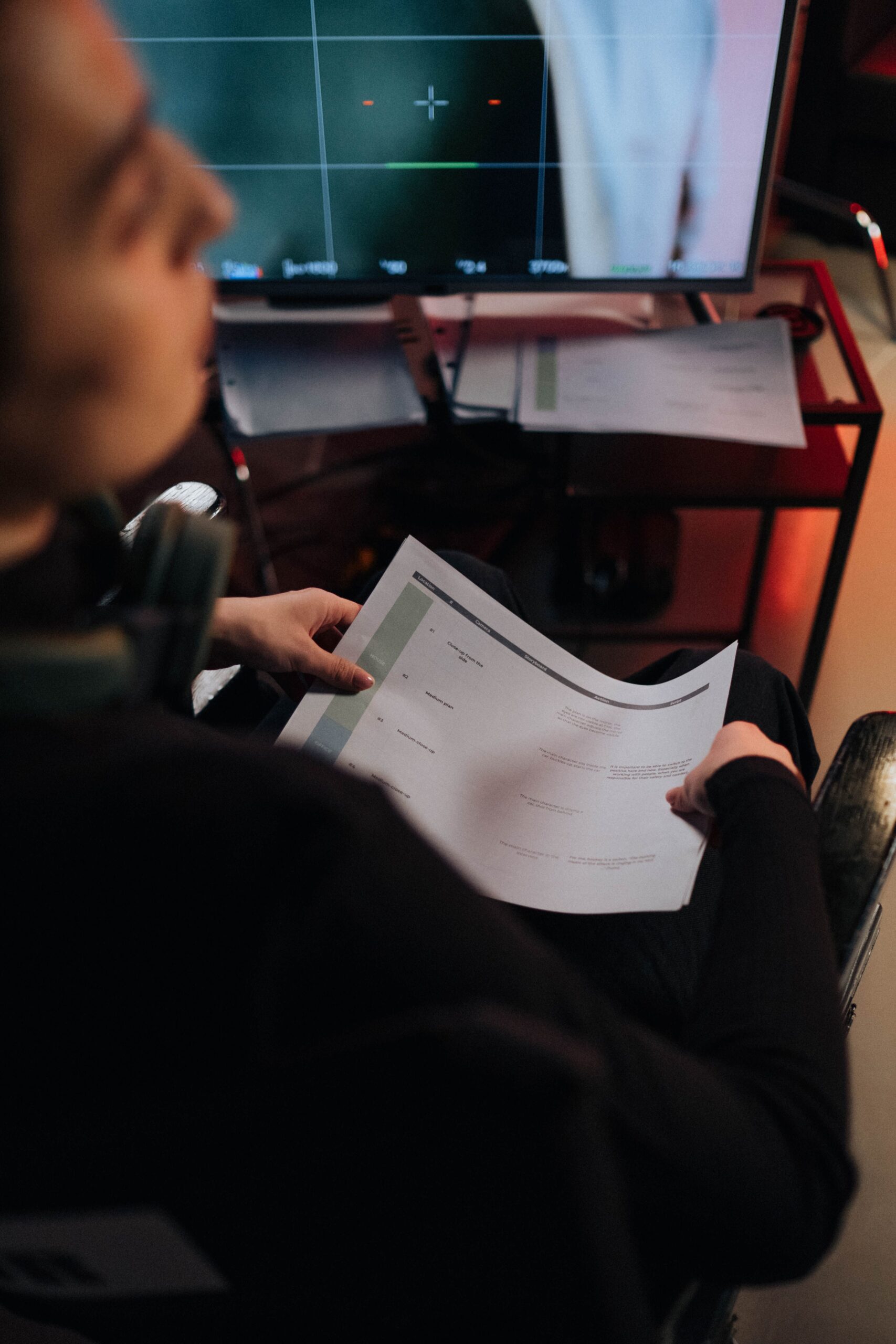
The ultimate bridge between the writer's brain and the director's lens is thorough, meticulous preparation. Long before the crew arrives, breaking down the script structural beats allows you to separate the pure creative vision from the chaotic mechanics of a fast-paced set.
By mapping out your directional intent early through clear cookbooks and tight shot lists, you protect the story's emotional pipeline. It gives you the structural freedom to collaborate openly with your actors and crew, knowing that the foundational core of your story is securely anchored.